Skip to the main content.
Buy Now Request a Consult

LNG


Beyond the Code: Real-World Integrity for LNG Piping & Pressure Vessels


LNG systems face thermal, cryogenic, and transient challenges that standard codes can't address. Thermal bowing, boil-off heat transfer, valve-closure pressure pulses, and dent assessment in stainless steel piping all sit outside what B31.3 or Division 1 equations cover.

See what's involved below ↓


Book a Demo
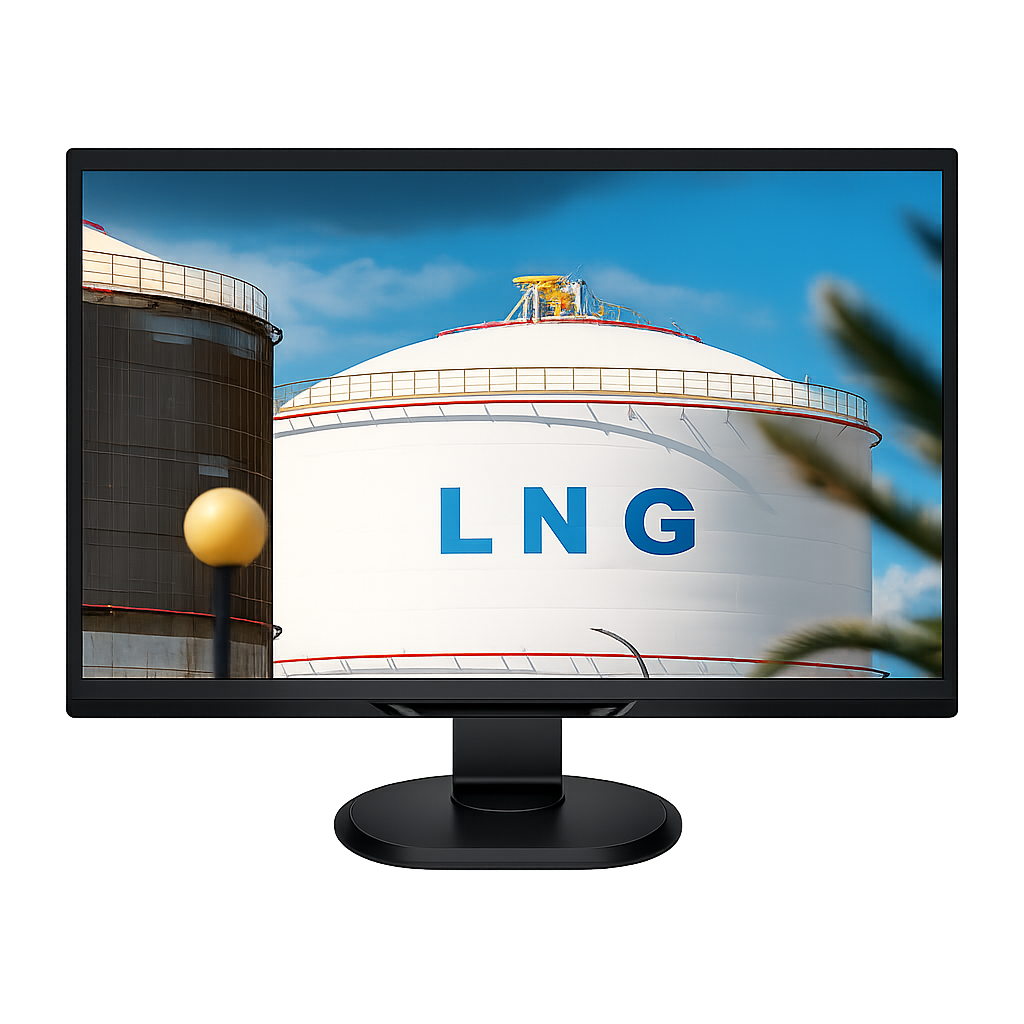
LNG terminal or cryogenic piping network in monitor-1

Cryogenic Heat Transfer

The liquid and gas phases of LNG need different thermal boundary conditions.​

Standard analysis averages them. Linear heat transfer models​ combining radiation and convection produce the temperature profile. Evaporation models handle boil-off boundary conditions. ​This has been applied to LNG boil-off in overflow tanks and loading arms.​

Thermal Bowing

Top-to-bottom temperature differences during LNG fill create bowing loads that code equations don't capture.

The analysis applies a moment couple internally to represent the difference in temperatures at the top and bottom of the pipe,​ turning a temperature distribution into a realistic bending load on filling arms and catch tanks.


Valve Closure & Pressure Pulses

The frequency domain approach requires very little input and is focused on the mechanical response of the system. Reasonable estimates of the mechanical response are easier to predict than precise fluid responses.​

What closure time do you enter?

If nothing about the valve is known, take one half of the nominal diameter in inches as the closure time in seconds.​
When total closure time is known but nothing else, enter 50% of that time.​

If a detailed closure profile is available, plot the curve and take the linear portion at the end of closure.​ More sophisticated users can control the input within the frequency domain solution space.​

Validate Your LNG Piping & PV Systems

These Problems Don't Fit Inside a Code Equation, Especially for Stainless Steel


Standard codes stop short of the realities of LNG.​
Cryogenic temperatures, heat flux through insulation gaps, and transient loads from rapid fill and valve events all sit outside simplified code methods.

One problem that comes up repeatedly in LNG work is dent assessment on stainless steel piping. Level 3 FFS on a dent in a pipe is an issue encountered quite often in the LNG industry, as there is a lot of stainless steel piping, which means Level 1 and 2 type analyses are strictly speaking not applicable.​​ You need Level 3 FEA to assess whether a dented stainless section can stay in service.

The plastic solver can be used with a fixed temperature condition to determine if a lower bound limit load is reached,​ giving you a conservative answer for pressure retention under thermal loading.

When your system needs Fitness-for-Service validation or a design check beyond code minimums, these are the kinds of conditions the analysis has to account for.


Industry Insight

  • 42% of operators named operational efficiency as their top strategic priority for the next 12 months.​ That includes both greenfield (design) and brownfield (design & FFS) work.
  • 25% cited Predictive and Preventive Maintenance, which maps directly to Fitness-for-Service capability.
  • 66.7% plan new investments in Engineering & Design Services​ over the next 12 months.

Why This Matters for Your LNG Program

Cryogenic design, thermal transient analysis, and FFS validation at API 579 Level 2 and 3 demand FEA built for pressure vessels and piping. When half the industry says the talent gap is the biggest barrier, the answer is analysis tools with built-in guidance and training that gets teams productive faster.

PRG provides on-demand software training and an LMS to support that.

Want to see how this runs on a real system? We'll walk you through the workflow.


LNG Export Growth & Procurement Strategies

A data-driven look at the procurement, technology, and workforce trends influencing the next generation of LNG export projects.

Download the Whitepaper
image (87)

Engineer Beyond the Code

See how PRG’s LNG solutions help you analyze beyond code limitations. Schedule a demo or technical consultation.


Return to top